Capicú
Sandbox Narrative Platformer
My Role
Art Director, Solo Game Designer & Developer
Tools
Unity (C#), Adobe Creative Cloud (Photoshop, Audition), Blender
Year
2026
Credits
Director & Designer: Esthefania Morantes
Sound Designer: Ngan Nguyen Tran Khanh
A story of migration, told through a yoyo.
Capicú is a 2.5D sandbox narrative platformer about growing up in Venezuela, having to leave everyone and everything behind, and rebuilding your life somewhere new. It uses visual metaphor, comedy, and objects behaviour to tell the story in a lighthearted and playful way.
My role is solo game designer and developer. Everything from across concept development, art direction, writing and voice acting. Here you can see a glimpse into the development of this game.
Showcased at




The bigger question
How do you make a game about migration feel engaging and playful?
Capicú navigates social, political, and economic commentary from the author's lived experience through a colorful figured world and an almost silly movement mechanic: swinging a yoyo, reaching audiences who may be interested in the playfulness and color rather than “serious” narrative games.
The process behind it

Coming up with the concept
The first iteration of the concept was about playing with analog games, think marbles, chess, spinning tops, dominoes, yoyos. During early development I realized how I've used games, particularly dominoes to connect with others, this led to the concept you now know as Capicú, showing scenes of this connection throughout my life. Different people, different places, we can always play dominoes.
Collage worldbuilding
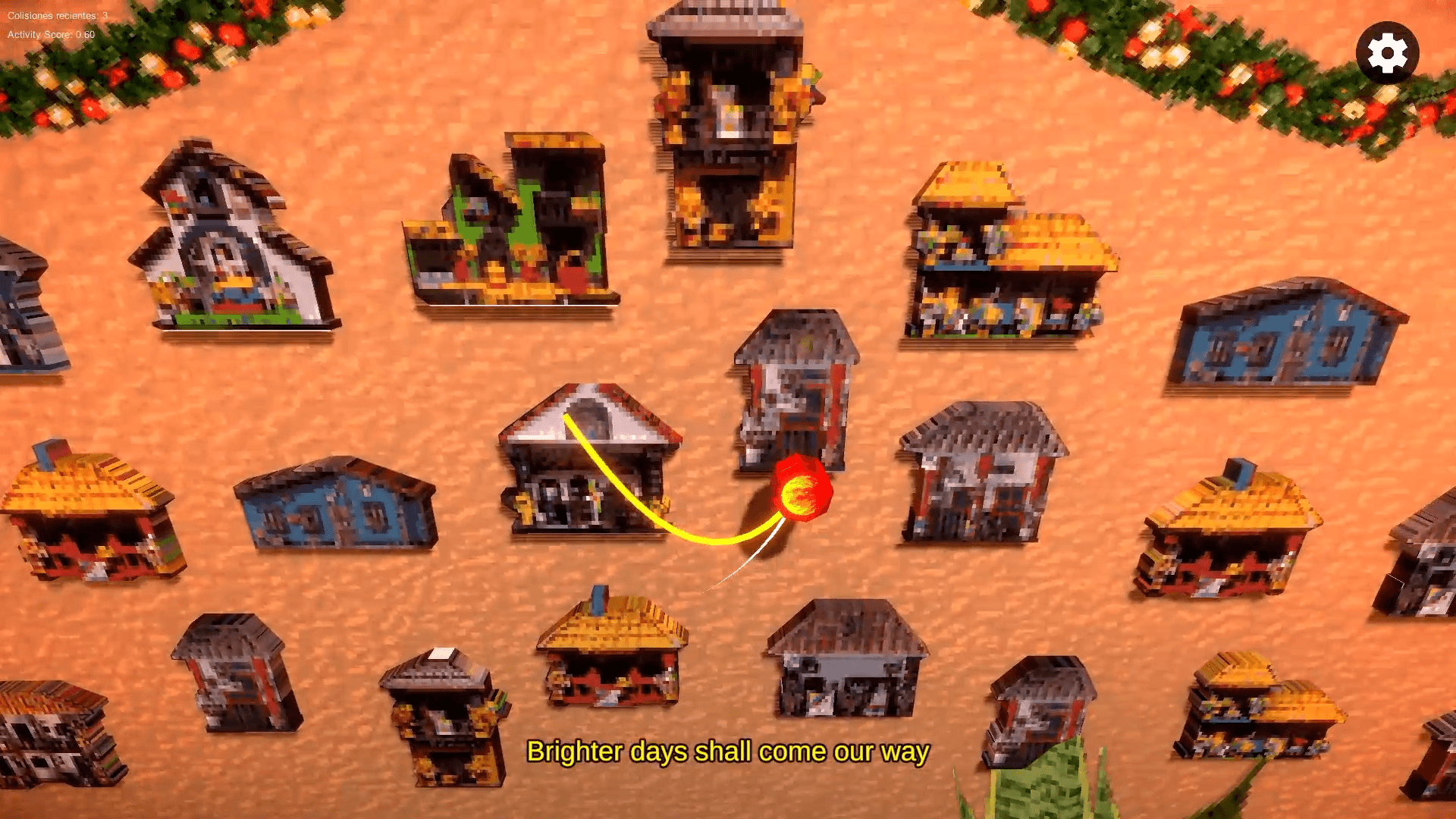
With this personal narrative in mind, I started gathering real life photo references that represented the culture, places, items for each scene's time and place. Building the world from these collages grounded my choices around colour, scale, and even pacing before I translated them into Blender and Unity


Modelling and stylisation
The game has a lowpoly "PS1" aesthetic with pixelated, stylised textures, resembling early 2000s photography and games. Every texture went through an editing process, and I modelled most assets myself because where else was I going to find a “hallaca.blend”?
Staging and lighting
The stages were arranged and post processing was done in Unity, taking into consideration that every stage had to work with the yoyo's movement and serve to the story's pacing and tone.

The outcome
Capicú has resonated players across nationalities, cultures, and ages. Players have stated they feel nostalgic for a childhood they didn't experience and they miss a place they don't know.
It's been showcased at PAX, ACMI, Sabby Gallery, and IGDA, playtested with general audiences, and is now available on Itch.io
